Cum să calculezi procentajul: Pași simpli și exemple din viața reală
Învățați cum să calculați procentajul cu formule rapide și practice pentru creșteri, scăderi și exemple din viața reală pe care le puteți folosi astăzi.
Extensii Recomandate

Înainte de a putea într-adevăr să stăpânești calcularea procentelor, este util să începi cu înțelesul cuvântului în sine: „pe o sută”. La bază, formula de bază este Percentage = (Part / Whole) × 100. Această ecuație simplă transformă orice fracție într-o cifră standardizată, ușor de înțeles și de comparat. Este un limbaj universal pentru totul, de la reduceri în magazine la rapoarte financiare.
Înțelegerea Ce Înseamnă cu Adevărat Procentele
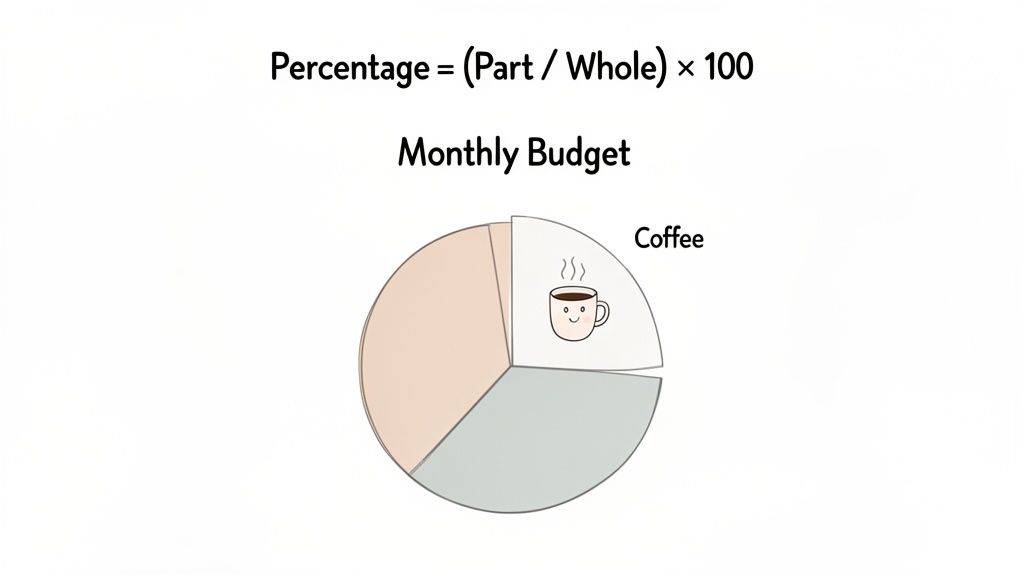
Să lăsăm matematica deoparte o clipă și să ne concentrăm asupra conceptului. Un procent este doar un tip specific de fracție în care numărul de sus (numărătorul) reprezintă părțile, iar cel de jos (numitorul) este întotdeauna 100. Deci, când cineva spune „50 la sută”, de fapt spune „50 din 100”. Acest cadru este incredibil de util, deoarece pune numere diferite pe un teren comun de joc.
Această idee nu este vreun truc matematic nou; este veche. Vorbim de pe vremea Imperiului Roman. Î jurul anului 27 î.Hr., împăratul Augustus a impus o taxă de 1/100 asupra bunurilor vândute la licitație, cunoscută sub numele de centesima rerum venalium. Ei lucrau cu fracții bazate pe 100 cu mult înainte ca sistemul nostru zecimal modern să apară. Trecând rapid la sfârșitul secolului al XV-lea, veți găsi cărți de aritmetică pline de exemple de calculare a profitului și a pierderii folosind această metodă. Puteți explora mai în profunzime istoria procentelor pe Wikipedia dacă sunteți curios.
Conectarea Matematicii la Viața Ta de zi cu Zi
Astăzi, acest instrument vechi de secole este țesut în țesătura vieții noastre de zi cu zi. Luați bugetul lunar, de exemplu. Să presupunem că venitul dumneavoastră este $4,000 pe lună și descoperiți că cheltuiți $160 pe cafea. Pentru a vedea cum se încadrează acest obicei în peisajul dumneavoastră financiar general, ați calcula procentul.
Folosind formula de bază:
- Partea: Cheltuielile dumneavoastră pe cafea ($160)
- Întregul: Venitul dumneavoastră lunar total ($4,000)
Calculul arată astfel: ($160 / $4,000) × 100, care rezultă în 4%. Dintr-o dată, acel $160 nu este doar un număr aleatoriu – este o bucată tangibilă din tortul dumneavoastră financiar. Văzut astfel, este mult mai perspicace decât doar privirea sumei în dolari, în sine.
A deveni bun la calcularea procentelor nu înseamnă memorarea formulelor. Înseamnă a învăța să vezi relația dintre numere într-un mod diferit. Transformă date abstracte în ceva pe care îl poți folosi cu adevărat.
Aceeași logică apare peste tot:
- A calcula un 15% bacșiș la cină.
- Verificarea dacă acea 30% reducere la o haină nouă este chiar o afacere bună.
- Observarea unei creșteri de 5% în contul dumneavoastră de pensie.
Înainte de a ne scufunda în amănuntele diferitelor calculări de procente, să expunem formulele de bază pe care le veți folosi.
Formule de Bază pentru Procente pe Scurt
Această tabelă este fișa dumneavoastră de ajutor rapid. Vom detalia fiecare dintre acestea, dar aceasta vă oferă o privire de ansamblu asupra instrumentelor fundamentale de care veți avea nevoie.
| Tip de Calcul | Formulă | Scenariu Exemplu |
|---|---|---|
| Găsirea Procentului unui Număr | Percentage / 100 * Whole |
Calcularea unei reduceri de 20% la un articol de 50$. |
| Găsirea Întregului Original | Part / (Percentage / 100) |
Găsirea prețului original dacă o reducere de 30% v-a salvat 15$. |
| Găsirea Procentului | (Part / Whole) * 100 |
Determinarea a ce procent dintr-un buget de 2.000$ este cheltuit pe chirie de 800$. |
Având aceste formule la îndemână simplifică lucrurile, dar adevărata cheie este să știi când și cum să le aplici. Aceasta este ceea ce vom acoperi în continuare.
Rezolvarea Celor Trei Probleme Comune cu Procente
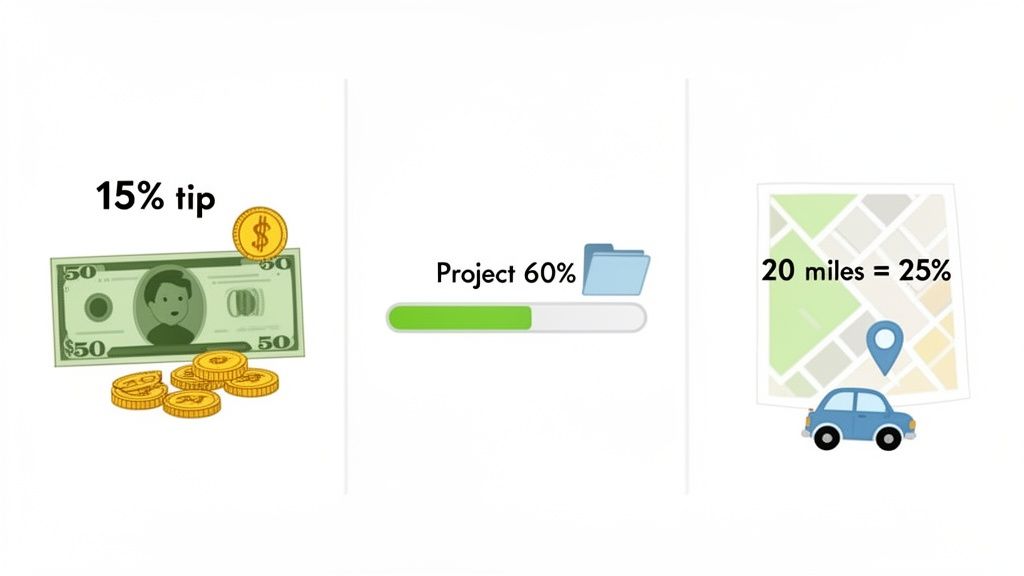
Când analizăm problema, majoritatea întrebărilor despre procente cu care te vei confrunta se încadrează în una dintre cele trei categorii comune. Dacă reușești să stăpânești acestea, vei fi pregătit pentru aproape orice situație care îți apare în cale, fie că îți calculezi un bacșiș la restaurant, fie că urmărești cât de aproape ești de termenul limită al unui proiect.
Aceste competențe de bază apar peste tot. De exemplu, în fitness, ai putea vrea să calculezi cum să calculezi caloriile arse pe bandă de alergat ca procent din obiectivul tău zilnic de aport caloric. Să analizăm fiecare scenariu cu o formulă clară și un exemplu practic.
Tipul 1: Găsirea Procentului unui Număr Dat
Acesta este cel pe care îl vei vedea cel mai des. Totul despre a răspunde la întrebări precum, „Ce este X% din Y?". Gândește-te la calcularea unei reduceri la un gadget nou, adăugarea unui bacșiș la nota de plată a cinei sau calcularea taxei de vânzare. Încerci să găsești valoarea specifică pe care un procent o reprezintă.
Iată formula principală: Value = (Percentage / 100) * Whole Number
Închipuie-ți: ai urmărit o pereche de căști la prețul de $250, iar tocmai au intrat la reducere cu 20%. Pentru a vedea câți bani economisești, trebuie să calculezi 20% din $250.
Introducând în formulă, obținem (20 / 100) * $250. Asta rezultă în 0.20 * $250, ceea ce îți oferă o reducere de $50. Noul tău preț este $200. Simplu ca bună ziua.
Tipul 2: Găsirea Procentului pe care îl Reprezintă un Număr față de Altul
Uneori, ai deja două numere și trebuie să înțelegi relația dintre ele. Aici răspunzi la întrebări precum, „Ce procent este X din Y?". Este perfect pentru a-ți urmări progresul către un obiectiv sau doar pentru a vedea cum se compară lucrurile.
Formula pentru aceasta este la fel de simplă: Percentage = (Part / Whole) * 100
Să spunem că conduci un proiect cu 80 sarcini în lucru. Până acum, echipa ta a terminat 56 dintre ele. Pentru a avea o imagine rapidă a progresului tău, vei împărți partea (sarcinile finalizate) la întregul (sarcinile totale).
Calculul arată astfel: (56 / 80) * 100. Aceasta se simplifică la 0.7 * 100, indicând faptul că proiectul este 70% complet. Pentru o analiză mai profundă a modului în care funcționează acest lucru în finanțe, consultă ghidul nostru despre cum să calculezi randamentul investițiilor.
Acest calcul este atât de puternic deoarece transformă numerele brute în ceva semnificativ. A spune „56 de sarcini sunt terminate" este doar o informație. A spune „suntem 70% complet" le oferă tuturor membrilor echipei o perspectivă instantă și acționabilă.
Tipul 3: Găsirea Sumei Totale dintr-o Parte și Procentul Său
Acest ultimul seamănă puțin cu a merge înapoi. Este pentru a răspunde la întrebări precum, „Dacă X este Y% din total, care este totalul?". Aceasta este adesea numită o problemă de „procent invers" și este incredibil de utilă pentru a calcula un preț original înainte de a se adăuga o reducere sau o taxă.
Veți avea nevoie de această formulă: Whole = Part / (Percentage / 100)
Imaginează-ți că primești un bonus neașteptat în valoare de $1,200. Șeful tău menționează că acesta reprezintă 15% din fondul anual de împărțire a profitului companiei. Vrei să știi cât este de mare acel fond? Folosește pur și simplu formula procentului invers.
Ați calcula $1,200 / (15 / 100), ceea ce echivalează cu $1,200 / 0.15. Răspunsul arată că fondul total de partajare a profitului a fost $8,000.
Stăpânirea acestor trei metode vă oferă o bază solidă pentru a aborda aproape orice problemă de procente pe care viața v-o aruncă.
Cum se Calculează Creșterea și Scăderea Procentuală
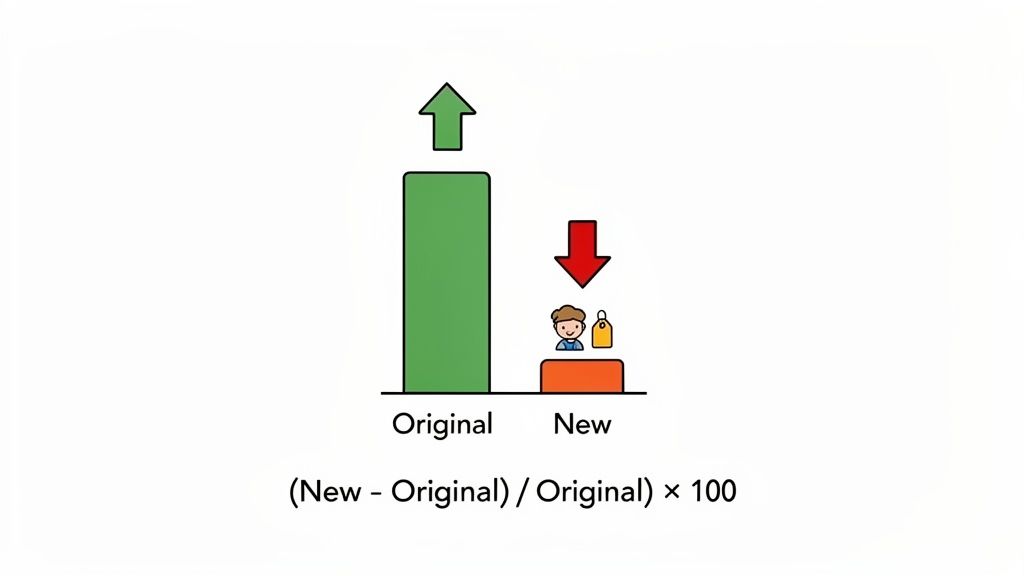
Procentele încep cu adevărat să spună o poveste atunci când măsoară schimbarea. Gândiți-vă – ne ajută să răspundem zilnic la întrebări cruciale. "Cu cât au crescut vânzările noastre trimestrul acesta?" sau "Care este adevărat discount pentru acest articol din lichidare de stoc?" Totul se reduce la înțelegerea creșterii și a declinului.
Minunat este că nu aveți nevoie de metode separate pentru creșteri și scăderi. O singură formulă puternică gestionează ambele, făcând-o un instrument esențial pentru aproape orice doriți să măsurați.
Iată formula care face toată treaba grea: ((Valoare Nouă - Valoare Originală) / Valoare Originală) × 100
Dacă rezultatul dvs. este un număr pozativ, aveți o creștere procentuală. Dacă este negativ, este o scădere. Simplu. Această calculație este o constantă peste tot, de la rapoarte economice la întâlniri de afaceri.
Calcularea unei Creșteri Procentuale
Haideti să trecem printr-un scenariu real. Imaginați-vă că dezvoltați un cont de social media. La începutul lunii, aveați 1.200 de urmăritori. Până la sfârșit, cifra a saltat la 1,500.
Deci, cu cât a crescut audiența dumneavoastră? Să aplicăm formula:
- Valoare Originală: 1.200 de urmăritori
- Valoare Nouă: 1.500 de urmăritori
Mai întâi, găsiți diferența dintre valorile nouă și veche: 1,500 - 1,200 = 300. Aceasta este creșterea brută.
Apoi, împărțiți acea diferență la punctul de pornire: 300 / 1,200 = 0.25.
În cele din urmă, înmulțiți cu 100 pentru a transforma acel zecimal într-un procent. Așa, pur și simplu, știți că numărul dvs. de urmăritori a crescut cu un solid 25%.
Aceeași logică este folosită pe o scară mult mai mare, cum ar fi atunci când economiștii urmăresc inflația. De exemplu, Indicele Prețurilor de Consum (CPI) din SUA folosește exact această calculație. Pentru a vedea cum s-au schimbat prețurile, ei analizează creșterea indicelui de la 278.802 în decembrie 2021 la 296.797 în decembrie 2022. Procesarea acestor cifre prin formulă arată o creștere de 6.5% – un semn clar că bunurile de zi cu zi deveneau mai scumpe. Puteți citi mai multe despre cum se calculează schimbarea procentuală în vremuri de schimbare.
Această calculație transformă numerele abstracte într-o poveste convingătoare. Un câștig de "300 de urmăritori" este doar o cifră; o "rata de creștere de 25%" este un indicator clar al performanței și al impulsului, pe care oricine îl poate înțelege.
Determinarea unei Scăderi Procentuale
Formula funcționează la fel de bine când lucrurile scad. Să spunem că ați avut în vedere un laptop cu prețul inițial de $950. Verificați din nou peste o săptămână și este la reducere pentru $760. Care este discountul real pe care îl primiți?
Să introducem cifrele în formula noastră de încredere:
- Găsiți diferența: 760 $ (Valoare Nouă) - 950 $ (Valoare Originală) = -$190.
- Împărțiți la prețul inițial: -$190 / $950 = -0.20.
- Conversiți la procent: -0.20 × 100 = -20%.
Acel semn minus confirmă că este o scădere. Obțineți un discount de 20% la laptop.
Acest lucru este la fel de important pentru companiile care își monitorizează performanța. O companie poate observa o scădere a veniturilor trimestriale de la $500,000 la $450,000. Prin calcularea (450,000 - 500,000) / 500,000, ar vedea o modificare de -10%, un semnal clar că ceva necesită atenție.
Fie că urmăriți cifrele de vânzări, economiile personale sau prețurile acțiunilor, această singură formulă vă oferă claritatea de a lua decizii mai bune.
Stăpânirea Procentelor Inverse pentru Finanțele din Lumea Reală
Uneori, cele mai practice probleme matematice vă cer să lucrați invers. Aceasta este ideea din spatele procentelor inverse, o abilitate mult mai frecventă în finanțele de zi cu zi decât ați putea crede. În loc să luați un procent dintr-un număr, încercați să găsiți numărul inițial înainte ca un procent să fie adăugat sau scăzut.
Să ne imaginăm o călătorie clasică la cumpărături tocmai ați cumpărat o jachetă nouă, iar factura finală ajunge la $120. Știți că taxa de vânzări în zona dumneavoastră este 20%. Așadar, care a fost prețul de etichetă real al jachetei înainte de taxe? Acesta este un scenariu perfect din lumea reală în care știința de a gestiona o calculație inversă a procentului vă salvează ziua.
Logica din Spatele Lucrului Invers
Trucul este să reformulați ce reprezintă de fapt prețul final. Acea $120 nu este doar costul articolului; este prețul inițial plus taxa de 20%.
Aceasta înseamnă că $120 pe care l-ați plătit este de fapt 120% din suma inițială (prețul de etichetă 100% + taxa de 20%). Odată ce înțelegeți acest lucru, restul este simplu. Trebuie doar să aflați care a fost valoarea acelei procent de 100%.
Formula este destul de simplă:
Sumă Inițială = Sumă Finală / (1 + Procentul ca Zecimal)
Să introducem numerele din exemplul cu jacheta:
- Sumă Finală: $120
- Procentul ca Zecimal: 20% este 0.20
Calculul devine $120 / (1 + 0.20), sau pur și simplu $120 / 1.20. Introduceți acest lucru în calculator și veți obține $100. Prețul inițial al jachetei a fost de 100$, iar taxa a adăugat încă 20$.(
Aceasta nu este doar pentru cumpărături. Această metodă funcționează pentru orice situație în care o valoare a fost crescută cu un procent. Ați putea-o folosi pentru a afla salariul înainte de adăugarea unui bonus sau pentru a găsi costul de bază al unui serviciu înainte de a fi adăugate taxele suplimentare.
De la Procentele Inverse la Creșterea Financiară
Aceeași logica – înțelegerea modului în care modificările procentuale afectează un număr de bază – este fundamentul planificării financiare pe termen lung, mai ales în investiții. Totul se reduce la modul în care câștigurile procentuale mici și constante se acumulează una peste alta în timp, o forță puternică cunoscută sub numele de compunere.
În timp ce procentele inverse vă ajută să găsiți o valoare trecută, instrumente precum un calculator de dobândă compusă fac exact opusul: proiectează în viitor. Ele vă arată cum o sumă inițială se poate multiplica prin aplicarea repetată a creșterilor procentuale. Pentru a vedea exact cum funcționează matematica, consultați ghidul nostru care detaliază formula dobânzii compuse și aplicațiile sale.
Puteți vedea acest lucru în acțiune chiar în browserul dumneavoastră cu extensia ShiftShift Compound Interest. Introduceți pur și simplu investiția inițială, cât intenționați să adăugați și randamentul anual estimat.
Instrumentul vizualizează cum o investiție inițială crește ca o avalanșă cu contribuții regulate. Este o modalitate fantastică de a vedea puterea câștigurilor procentuale constante și de a transforma un obiectiv financiar abstract într-un plan clar și realizabil.
Erori Comune și Scurtături de Calcul Mental
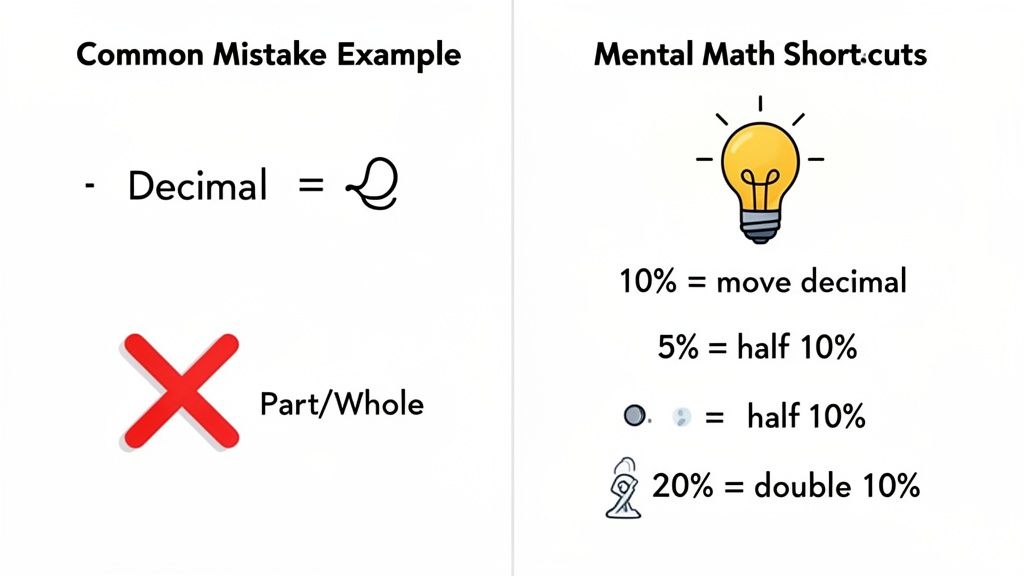
Chiar și atunci când cunoașteți formulele, este surprinzător de ușor să faceți o mică eroare care vă strică întreaga calculație. Una dintre cele mai comune greșeli pe care le văd este plasarea greșită a virgulei zecimale. Este o simplă scăpare, dar are un impact enorm.
Amintiți-vă, 25% se convertește în 0.25, nu 2.5. Acea punct micuț, cu o poziție diferită, vă poate infla rezultatul de zece ori—transformând un bacșiș rezonabil la restaurant într-o masă costisitoare.
O altă eroare clasică este confuzia dintre „parte" și „întreg", mai ales când calculați o creștere sau o scădere procentuală. Punctul dumneavoastră de plecare, valoarea originală, este întotdeauna numitorul. Dacă folosiți în schimb valoarea nouă, răspunsul dumneavoastră va fi complet greșit. Acordați-vă întotdeauna o clipă pentru a confirma prin ce număr împărțiți.
Trucuri Rapide de Matematică Mentală
Nu trebuie să apelați mereu la un calculator. De fapt, învățarea câtorva trucuri simple vă poate face mult mai rapid în estimarea procentelor pe loc, fie că vă uitați la o raft cu reduceri sau împărțiți nota de plată la cină. Dacă doriți cu adevărat să vă mișcați repede, există niște scurtături de matematică mentală pentru procente excelente pe care le puteți stăpâni.
Piatra de temelie absolută a matematicii mentale cu procente este regula de 10%. Este genială prin simplitatea sa: pentru a găsi 10% din orice număr, pur și simplu mutați virgula cu o poziție la stânga.
- 10% din $80 devine $8.0.
- 10% din $450 este $45.0.
- 10% din $27.50 se transformă în $2.75.
Este atât de simplu. Odată ce ați înțeles 10%, puteți calcula aproape orice altceva.
Gândiți-vă la 10% ca la elementul dumneavoastră de construcție. De acolo, puteți construi aproape orice alt procent de care aveți nevoie prin adunare, scădere sau înmulțire simplă. Este un truc puternic pentru estimările zilnice.
Construind Peste Regula de 10 La Suta
Odată ce puteți găsi instantaneu 10%, adevărata distracție începe. Trebuie să calculați un bacșiș de 20% la o notă de $60? Găsiți 10% ($6) și înmulțiți-l cu doi. Gata, $12. Ce ziceți de o reducere de 5%? Găsiți 10% și tăiați-o la jumătate.
Iată o privire rapidă asupra modului în care puteți extinde acest singur truc pentru a aborda alte procente comune fără efort.
Scurtături de Matematică Mentală pentru Procente Comune
Acest mic tabel este fișa dumneavoastră de cheat pentru a face matematică mentală cu procente. Totul începe cu acel truc ușor de 10%.
| Procentaj | Scurtătură Mentală | Exemplu (din 400) |
|---|---|---|
| 1% | Mutați virgula două poziții la stânga | 4 |
| 5% | Găsiți 10%, apoi înjumătățiți | 10% este 40, așa că 5% este 20 |
| 10% | Mutați virgula o poziție la stânga | 40 |
| 15% | Găsiți 10%, găsiți 5% și adunați-le | 40 + 20 = 60 |
| 20% | Găsiți 10%, apoi înmulțiți-l cu doi | 40 x 2 = 80 |
| 25% | Împărțiți numărul la 4 | 400 / 4 = 100 |
| 50% | Împărțiți numărul la 2 | 400 / 2 = 200 |
| 75% | Găsiți 50%, găsiți 25% și adunați-le | 200 + 100 = 300 |
După cum poți vedea, câteva scurtături de bază pot gestiona majoritatea calculelor procentuale pe care le vei întâlni zi de zi. Aceste tehnici sunt perfecte pentru a lua decizii rapide și inteligente, fără a fi nevoie să te oprești și să scoți telefonul.
Răspunsuri la Întrebările Tale Despre Procente
Chiar dacă ai pus bazele, te vei confrunta în continuare cu scenarii specifice care te pot face să ridici din sprâncene. Ha să ne ocupăm de unele dintre cele mai frecvente întrebări care apar atunci când oamenii încep să lucreze cu procentele.
Cum Calculez Procentul dintr-un Număr Total?
Aceasta este baza calculului procentelor. Pentru a afla un procent din orice număr, primul pas este să transformi procentul într-un număr zecimal. Doar îl împarți la 100. Astfel, 20% devine 0.20.
Odată ce ai numărul zecimal, îl înmulțești cu suma totală. Să presupunem că trebuie să găsești 20% din $150. Calculele sunt pur și simplu 0.20 × 150, care îți dă $30. Formula standard pentru aceasta este (Procent / 100) × Suma Totală.
Iată un mic truc pe care l-am folosit întotdeauna: ori de câte ori vezi cuvântul „din” într-o problemă cu procente, gândește-te la „înmulțire”. Așa că, „20% din 150” devine instantaneu 0,20 × 150. Această scurtătură mentală face ca aceste probleme să pară mult mai directe.
Care Este Cea Mai Rapidă Metodă de Calcul a Creșterii Procentuale?
Când trebuie să afli creșterea procentuală dintre două numere, există o singură formulă care te duce acolo rapid: ((Număr Nou - Număr Original) / Număr Original) × 100.
Să spunem că traficul site-ului tău a crescut de la 5,000 vizitatori săptămâna trecută la 6,000 săptămâna aceasta. Iată cum ai introduce valorile:
- (6,000 - 5,000) / 5,000 = 0.20
- Apoi, 0,20 × 100 = 20%
Aceasta este o creștere de 20% a traficului. Poți chiar să copiezi toată formula în bara de căutare a browserului, iar aceasta îți va face calculele în câteva secunde.
Cum Funcționează Exact un Procent Invers?
Procentele inverse sunt puțin ca o muncă de detectiv – găsești numărul original înainte ca un procent să fi fost adăugat sau scăzut. Un exemplu clasic din viața reală este calcularea unui preț înainte de adăugarea TVA-ului sau aplicarea unei reduceri.
Imaginează-ți că un articol costă $90 după o reducere de 10%. Acea $90 nu este prețul întreg; este ceea ce rămâne – reprezintă 90% (100% - 10%) din prețul inițial de pe etichetă.
Pentru a afla acel preț inițial, împarți suma finală la procentul pe care îl reprezintă (ca număr zecimal). În acest caz, este $90 / 0.90, care este egal cu $100. Deci, articolul a costat inițial $100.
Pot Face Calculul Procentelor într-un Foaie de Calcul?
Desigur. Foiile de calcul precum Excel și Google Sheets sunt făcute pentru acest lucru și sunt deosebit de puternice atunci când lucrezi cu multe date. Poți introduce pur și simplu formule simple direct în celule.
De exemplu, dacă ai o valoare totală în celula A1 și partea pe care vrei să o măsori în celula B1, ai introduce pur și simplu =(B1/A1) într-o a treia celulă.
După ce apeși Enter, asigură-te să formatezi celula respectivă ca „Procent”. Aceasta este, fără îndoială, una dintre cele mai eficiente modalități de a gestiona multe calcule procentuale simultan.
Obosit să te lupți cu calculele manuale? Instrumentele din browser de la ShiftShift Extensions îți permit să calculezi procente, să modelezi investiții și multe altele, fără a părăsi niciodată fila curentă. Începe cu ShiftShift Extensions și accelerează-ți fluxul de lucru de astăzi.